Process engineering: the hidden systems behind efficient manufacturing
Process engineering is the heart and lungs of every system and every operation, and it does far more work than you see on the designs. It manages the heat you never billed for, the vapours that never reach the workspace, the pressure spikes that never hit a seal, and the airborne contaminants that never reach a product surface. Those unseen tasks are what keep food lines compliant, automotive cells reliable and research environments repeatable. In other words, process engineering is not just how you make things, it is why they keep running the way you intended.
At Arcade, all of our projects touch on process engineering in some way or form. We specialise in the full range of process engineering temperature control covering process heating, steam, hot water, thermal oil processes, alongside ventilation services, and ductwork supply and extraction. The aim is simple: to ensure our clients’ businesses run efficiently and effectively.
Our journey started 50 years ago on the printing presses and since then we have diversified and become award-winning specialists, working across a wide range of industries. Today we offer a full turnkey solution across our suite of services, including an initial consultation to understand your needs, shared ideas and recommendations, a detailed project development plan, comprehensive design, installation of a fully operational solution, and a bespoke aftercare and maintenance package.
How does process engineering show up in practice?
We have worked with many different organisations in very different sectors on process engineering solutions that without the right design, simply would not run.
Car manufacturing
If you are looking at buying a new car, process engineering helped it reach the production line. We supported Vauxhall Motors in redesigning mechanical, electrical and control systems and installing new cooling water systems as part of a factory reconfiguration for a new vehicle.
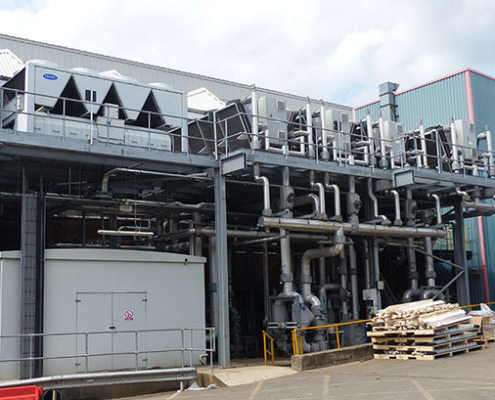
We re-routed the plant’s 16” High Pressure Hot Water (HPHW) main to enable the installation of a new conveyor system. We also reconfigured the existing cooling water system for new robot welding cells on their production lines and installed a new system that provides 700kw of free cooling via adiabatic coolers.
Food and drink production
From a cold can on a warm day to the sauce on your favourite fast-food meal, process engineering keeps products consistent and safe.
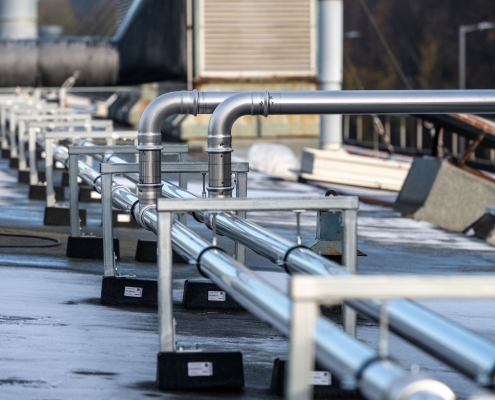
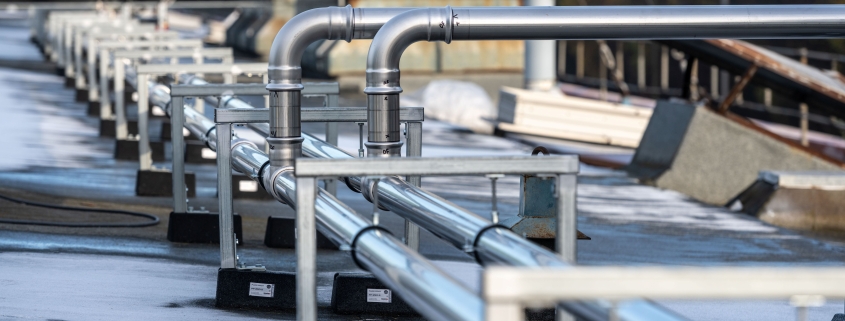
At Crown Packaging’s new beverage can manufacturing facility in Peterborough, we designed, supplied and installed of over 10km of pipework across multiple manufacturing lines, moving different fluids at different pressures through its production process. Using the Mapress system ensured we were able to design and install more efficiently than traditionally welded stainless steel pipework, and allowed us to complete the work without interruption to the manufacture conveyor systems. The result was a fully facility with significant cost and efficiency savings, and a 25-year warranty on the installation.
At McCormick Foods – also in Peterborough – a major producer of sauces for household-name fast-food brands such as McDonald’s, Burger King, Pizza Hut and KFC – we assessed, maintained, and installed new ductwork and diffusers into their air handling unit (AHU) system.
Regularly cleaned and maintained air filtration systems are critical in food manufacturing. They prevent contamination and maintain compliance with strict hygiene standards and food safety regulations. The AHU delivers clean, filtered air and extracts contaminated air, protecting products and processes from potential hazards.
With the AHU located on the plant deck above sensitive and expensive machinery, and the continuously operating production lines below, we designed and built sealed cleanroom enclosures on scissor lifts, raised by cherry pickers and sealed to the ceiling during work, to prevent any risk of debris contamination. This allowed our engineers to work safely and hygienically, without impacting operations below.
Print materials
The newspaper or magazine you pick up relies on stable temperatures.
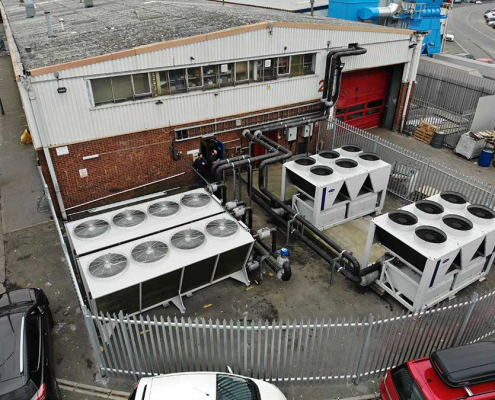
Working with a well-established print firm, we provided cooling for their printing machines, which typically get hot during production. To prevent disruption to the print runs, we installed 12 and 20 degree cooling circuits to optimise “free cooling” via dry air coolers. When temperatures drop below 12 degrees, the plant can run on dry air coolers alone; when they exceed 20 degrees, it switches to mechanical cooling.
Defence
Some of the most demanding environments are in research and national security. With Cranfield University and Rolls Royce we designed, supplied and installed high-spec chilled water and air handling systems to keep test rigs within tight temperature bands. The fully-controlled system created a stable environment to allow experiments to heat, cool and ice jet engine fuel, and to be run safely at supersonic conditions.
Five things to know about process engineering
- Start with the process, not the plant room: map what the line needs to deliver before choosing heating, cooling and ventilation.
- Turn symptoms into specifications: unstable temperatures, vapour and contamination issues usually point to measurable targets you can design around.
- Use the right mix of technologies: free cooling, adiabatic coolers, steam or thermal oil often work best in combination.
- Design, install and maintain as one: alignment reduces risk, improves compliance, reduces cost and makes performance easier to prove.
- Protect operations with planned maintenance: stability is cheaper than downtime, especially in food production and high-value R&D environments.
How we can support you
Do you recognise elements of your own operation in these examples? We would be happy to explore how a tailored process engineering solution could support your next project. The right process engineering decisions made now will shape performance for years, and with our service maintenance packages, we’ll be on-hand to ensure your buildings operate at optimum levels of performance and efficiency and can continue to function avoiding costly downtime. Keen to know how we can help? Call us on 01480 861111.